 Reviews


 Proudly American


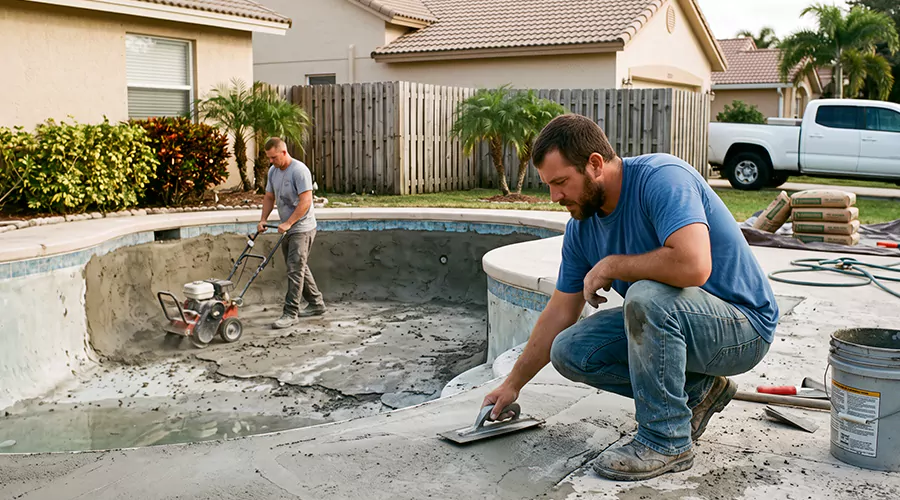
Pool concrete should be resurfaced when the interior finish becomes rough or starts peeling, or when worn areas expose the underlying shell. Mold and drywall repair may be needed when moisture around the pool area has also affected nearby drywall or wall materials. Many plaster finishes need renewal after roughly 7 to 12 years, while aggregate finishes can often last 15 years or longer with proper water balance.
Age is only a guide because water chemistry and prior repairs can shorten finish life.
What Are the Main Signs a Concrete Pool Needs Resurfacing?
A pool finish changes gradually as it wears. Roughness often appears before large sections begin flaking.
Watch for these signs:
- Plaster feels rough against bare feet.
- Finish begins peeling or flaking.
- Persistent stains remain after cleaning.
- Small pits appear across large areas.
- Aggregate starts coming loose.
- The finish looks thin in traffic areas.
- Cracks develop in the interior coating.
- Chalky residue appears repeatedly.
- Patches no longer match surrounding areas.
- The shell begins showing through worn spots.
Pool concrete resurfacing is most useful before large areas of the finish detach.
How Old is Too Old for a Pool Finish?
Traditional pool plaster often lasts around 7 to 12 years. Aggregate or pebble finishes commonly last longer and may reach 15 years or more. Actual life depends on finish quality and maintenance.
| Pool Finish | General Service-Life Range |
|---|---|
| Standard plaster | About 7 to 12 years |
| Quartz finish | Often 10 to 15+ years |
| Pebble or aggregate | Often 15+ years |
| Pool paint | Usually shorter than plaster |
A sound 15-year-old finish may not need immediate work. A newer pool with widespread peeling still deserves investigation.
Why Does Pool Plaster Become Rough?
Pool plaster loses its smooth surface as the cement paste wears and aggregate becomes more exposed. Poor water balance can speed this process. Mineral scale can also create a rough texture that feels similar to worn plaster.
A rough surface can irritate feet and make brushing harder. Local mineral buildup may respond to treatment, while widespread deterioration points toward finish wear.
Are Stains a Reason to Resurface?
Stains alone do not always mean the finish needs replacement. Metal staining or organic marks can sometimes be treated without resurfacing. The key question is whether discoloration sits on the surface or reflects permanent finish damage.
Resurfacing becomes more reasonable when:
- Stains cover large areas.
- Cleaning does not improve them.
- The plaster is also rough.
- Surface pits surround the stains.
- Previous spot repairs remain obvious.
Pool concrete resurfacing should solve worn finish problems rather than being the first response to every discoloration.
What Do Peeling or Flaking Areas Mean?
Peeling can mean the finish has lost its bond. Small defects may be repairable, while widespread delamination usually points toward resurfacing.
A hollow sound can indicate separation beneath the finish. Exposed shell areas can expand as nearby material loosens.
Are Pool Cracks Fixed by Resurfacing?
Only some cracks are surface defects. A thin crack limited to the finish may be addressed during surface preparation. Structural cracks through the shell need separate evaluation.
| Crack Condition | Typical Direction |
|---|---|
| Fine finish crack | Evaluate during resurfacing |
| Stable surface defect | Repair may be possible |
| Crack that keeps widening | Investigate movement |
| Water loss near crack | Check for a leak |
| Displaced shell crack | Structural evaluation |
A new finish should not be expected to hold together a moving concrete shell.
Concrete restoration may be needed before the pool finish is renewed if shell defects extend beyond the surface.
Does Water Chemistry Affect Resurfacing Timing?
Yes. Pool water outside the recommended chemical range can shorten plaster life. Low pH can contribute to surface etching, while scale-forming conditions can create rough mineral deposits.
Roughness is not always caused by age. Track pH and alkalinity along with calcium hardness. A consistent maintenance record can help explain why the finish is changing.
How Much Does Pool Resurfacing Cost in 2026?
In 2026, whole-pool resurfacing commonly costs about $6,000 to $15,000. Finish choice and interior surface area can move the price significantly.
| Cost Factor | Effect on Price |
|---|---|
| Larger pool surface | Higher |
| Standard plaster | Lower to moderate |
| Pebble finish | Higher |
| Extensive crack repair | Higher |
| Tile work | Higher |
| Major shell repairs | Much higher |
The quote should separate surface renewal from structural repairs when both are needed.
How Long Does Pool Resurfacing Take?
A typical project takes about five to seven days, including draining and surface preparation.
A common sequence is:
- Drain the pool.
- Prepare or remove the failed finish.
- Repair suitable surface defects.
- Apply the new finish.
- Refill the pool as directed.
- Begin the required startup process.
Follow the filling and curing instructions for the chosen finish.
What Can You Check Yourself?
You can inspect the finish while the pool remains full. There is usually no reason to drain the pool simply to look at surface wear.
Try this check:
- Feel accessible walls for rough areas.
- Mark peeling locations on a sketch.
- Photograph stains in similar lighting.
- Measure visible cracks where practical.
- Compare damage every few months.
- Track unusual water loss.
Do not drain a concrete pool simply for inspection. Groundwater pressure can affect an empty shell in some conditions.
When Should You Call a Professional?
Professional assessment is useful when finish damage is widespread or cracks may involve the pool shell. Unexplained water loss is another reason to investigate before resurfacing.
Consider professional help when:
- Large areas of plaster are peeling.
- The underlying shell is exposed.
- Cracks continue widening.
- The pool loses water unexpectedly.
- Previous patches keep failing.
- The finish is rough across most surfaces.
- Structural movement is suspected.
How Can You Delay the Next Resurfacing?
Finish life depends heavily on routine pool care after the work is complete.
- Test water chemistry regularly.
- Correct pH problems promptly.
- Brush the pool on schedule.
- Address scale before buildup becomes severe.
- Avoid unnecessary draining.
- Follow startup instructions after a new finish.
- Repair small finish defects before they expand.
Conclusion
Pool concrete should be resurfaced when the finish shows widespread roughness or peeling and cleaning no longer restores the surface. Plaster commonly lasts around 7 to 12 years, while aggregate finishes can last longer. Age alone does not decide the timing. Inspect the surface for exposed shell areas and changing cracks. If structural movement or unexplained water loss appears, evaluate those problems before resurfacing.
Frequently Asked Questions
How often should a concrete pool be resurfaced?
Many plaster finishes need resurfacing about every 7 to 12 years. Longer-lasting aggregate finishes can often exceed 15 years.
Does rough pool plaster always need resurfacing?
No. Local scale can also feel rough. Widespread worn plaster is a stronger resurfacing sign.
Can pool cracks be covered during resurfacing?
Small stable finish cracks may be repaired. Structural shell cracks need separate correction.
How long does pool resurfacing take?
Many projects take about five to seven days before the pool returns to the filling and startup phase.
How much does pool resurfacing cost?
In 2026, many whole-pool resurfacing projects cost about $6,000 to $15,000 depending on finish and pool size.
Can you wait until plaster falls off completely?
It is better to address widespread deterioration earlier. Exposed shell and growing delamination can make later repairs more involved.